Electric vehicle charging hardware gets all the attention in site photos, but software is what actually keeps your network online, billable, and easy to run. For IT, operations, and property teams, the decision is no longer "do we really need EV software?" It's “Which software do we want running our charging program for the next 5 to 10 years?”
Public EV charging infrastructure is expanding rapidly; U.S. non-home charging ports surpassed 200,000 in 2025, and deployments continue to grow year over year. Whether you manage a commercial portfolio, fleet depot, campus, or municipal network, the right EV charging software platform controls uptime, access, payments, reporting, and integration with the rest of your tech stack. This guide walks through the features to look for, typical pricing models, evaluation criteria, and how AmpUp’s charging management platform ties it all together.
TL;DR: What is EV charging software, and what does it do?
EV charging software is a cloud-based management platform that monitors, controls, and optimizes EV chargers across one or many locations. Instead of treating each charger as a standalone device, software turns your stations into a managed network you can operate from a single dashboard. With increasing global EV adoptions, the charging software market is forecast to expand rapidly, with some estimates projecting it will grow from about $1.1 billion in 2023 to over $11 billion by 2032.
Modern EV charging platforms (like AmpUp) typically include five core capabilities:
- Remote Monitoring and Control
View live status for every charger, track energy usage, set configurations, and trigger remote actions so your team doesn't have to drive to the site for basic troubleshooting. - Access Control and Authentication
Use RFID cards, mobile apps, and contactless payments to decide who can charge, when, and at what price. - Payment Processing and Billing
Handle credit cards and fleet cards, automate invoices, and track charging revenue by site, customer group, or network. - Hardware-agnostic Management
Run OCPP-compliant chargers from multiple manufacturers on a single platform, avoiding vendor lock-in. - Analytics and Reporting
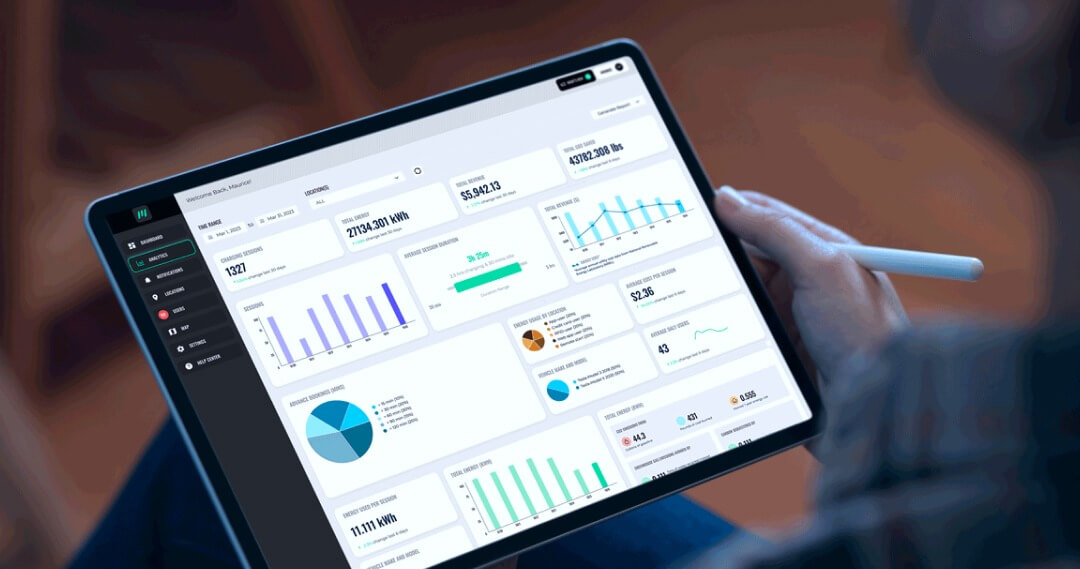
Track utilization, costs, emissions, and session success rates (aim for 98.5 percent or better) to prove ROI and support ESG reporting.
What is EV Charging Software? Understanding the Core Platform
At its core, EV charging software is the operating system for your charging network. It connects hardware, drivers, site rules, and business systems into a single environment your team can actually manage.
Without software, chargers behave like isolated devices. With a platform in place, they become part of a coordinated network where uptime, access, pricing, and reporting are controlled centrally. This is what allows organizations to scale from a handful of chargers to a portfolio-wide program without adding operational overhead.
Cloud-based Management vs Hardware-only Setups
Non-networked, “plug and go” chargers are fine in a private garage. For commercial, fleet, and public use, they create more work than they solve. There is no visibility, no billing, and no way to know a station is offline until a driver complains. In surveys of EV drivers, charger reliability ranks above charger availability as the top frustration when charging fails.
Cloud-based EV charging platforms like AmpUp sit between your chargers, drivers, and business systems to:
- Connect stations across all locations into one control panel
- Push firmware and configuration updates without on-site visits
- Store and process data for billing, analytics, and ESG use cases
- Scale from a pilot of a few ports to hundreds or thousands.
The Three Key Parts of a Charging Platform
A Complete platform usually includes:
- Backend and operator console
- Live map and status of all stations
- Controls for pricing, access, and load management
- Alerts, reports, and integrations
- Driver-facing experience
- Mobile app or web-based flow to find, start, and pay for charging
- Notifications when sessions start, end, or fail
- Easy access to receipts and support
- APIs and integrations
- Hooks into fleet systems, work order tools, property management software, and utility programs
- Data feeds for finance, sustainability, and IT teams
OCPP: Why Open Standards Matter
Open Charge Point Protocol (OCPP) is the standard that lets software from one provider talk to chargers from another. Instead of buying “one brand forever,” you can plug multiple manufacturers into one platform.
AmpUp’s platform is built around OCPP and supports a growing list of hardware partners so you can:
- Mix and match charger models by site type
- Replace underperforming hardware without changing software
- Scale new locations without re-platforming
For non-technical buyers, think of OCPP as the difference between a closed ecosystem and a universal plug.

Essential Features Every EV Charging Platform Should Have
Not all EV charging platforms are created equal. Some are built for small pilots, others for consumer-focused public charging, and a smaller group is designed for commercial, fleet, and municipal operators managing real operational complexity.
At a minimum, a production-ready EV charging management system should support reliable uptime, flexible access rules, automated billing, and reporting that multiple teams can trust. If any of these are bolted on or handled manually, issues tend to surface quickly as usage grows.
Real-time Monitoring and Station Management
At a minimum, your platform should give you live visibility into every port in your network: available, charging, occupied, faulted, or offline. With AmpUp, operations teams can:
- See status and energy usage at the station, site, or portfolio level
- Start or stop sessions remotely when drivers need help
- Receive alerts when a station faults, so issues are handled before they spread
- Aim for 99.9% platform uptime and 98.5% session success rates with proactive monitoring instead of reactive firefighting
Access Control and Authentication
Different sites have different access rules. A workplace, fleet yard, and public lot do not run on the same policy. Your software should support:
- RFID cards for employees and fleet drivers
- App-based authentication and QR codes for tenants and guests
- Open public access for retail and hospitality sites
- Rules by user group (employees, residents, visitors, public) and time of day
AmpUp lets you configure access by site, station, or driver group so you can keep things open where it matters and controlled where it needs to be tighter.
Payment Processing and Revenue Management
If you plan to recover costs or generate revenue, you will need built-in payments. Look for a platform that supports:
- Multiple pricing models: per kWh, per minute, per session, or subscription
- Different rates for tenants, employees, fleets, and the public
- Automatic billing, tax calculation, and reconciliation
- Support for common payment types and fleet cards
AmpUp’s charging management platform gives property and fleet teams the tools to set rates that match their goals, from cost recovery to revenue-positive programs. 
Driver Experience and Mobile App
No matter how good your dashboard is, a clunky driver experience will tank utilization. Your platform should make it simple to:
- Find available stations with real-time status
- Start charging in a few taps
- Receive notifications when charging is complete or if there is a problem
- Get help through built-in support options
AmpUp focuses on clean, intuitive flows that make charging feel predictable for drivers and low-touch for your team.
Multi-site and Portfolio Management
Most buyers are not managing a single charger. They are managing a portfolio of sites with different needs. Your platform should scale from “first four ports” to “full network” with: 
- Centralized configuration across locations
- Site-specific pricing and rules
- Role-based access for local managers vs central teams
- Reporting that rolls top-level metrics up while still letting you drill down to a single charger
AmpUp is designed for operators running everything from one facility to distributed, multi-tenant networks.

Advanced Capabilities for Enterprise Charging Operations
Once a network grows beyond a few sites, basic features stop being enough. Enterprise charging operations introduce new constraints around power availability, fleet schedules, reporting requirements, and support workflows. Advanced capabilities are not about bells and whistles. They are about keeping charging predictable, controlling costs, and avoiding operational surprises as usage scales across locations, vehicles, and user groups.
Load Management and Semand Eesponse
Power is one of the biggest cost drivers in EV charging. For commercial sites, demand charges can account for 30–70% of an electricity bill if EV charging load is unmanaged. Software should help you use what you have more intelligently. Look for:
- Dynamic power allocation across ports when multiple vehicles are connected
- Schedules based on electricity rates or off-peak windows
- Demand charge mitigation and demand-response program participation
- Integration with building energy management systems
AmpUp’s platform supports load management, helping you avoid unnecessary infrastructure upgrades and keep utility bills in check.
Fleet Management Integration
For fleet operators, charging is part of a bigger operational picture that includes routes, telematics, and vehicle assignments. A strong platform will:
- Integrate with leading telematics providers
- Support vehicle-specific charging profiles and schedules
- Track which vehicles charged, where, and at what cost
- Provide depot views that match how your operations team thinks about “return to base” charging
Analytics, Reporting, and ESG
More than 90% of S&P 500 companies now publish ESG or sustainability reports, increasing demand for auditable energy and emissions data. IT and operations care about uptime and tickets. Finance cares about revenue and cost recovery. Sustainability teams care about energy and emissions. Your software needs to serve them all with:
- Utilization dashboards and trendlines
- Cost allocation by site, department, or customer
- Session success rates and driver satisfaction indicators
- Emissions reduction estimates (kWh delivered, CO₂ avoided)
- Exportable reports for ESG and board-level updates
AmpUp’s reporting tools are built to give properties, fleets, and public entities a clear story on how charging is performing.
Maintenance Workflows and Uptime
High uptime does not happen by accident. Look for platforms that:
- Generate alerts based on session errors and fault codes
- Support remote soft and hard resets to avoid truck rolls
- Integrate with work order systems for field technicians
- Track warranty, replacement cycles, and recurring issues by device
AmpUp’s real-time monitoring and support model is built around keeping equipment online and drivers charging without drama.
OCPP Compliance, Security, and Hardware Compatibility
Software decisions lock in long-term technical and operational tradeoffs. Standards support, security posture, and hardware compatibility determine how flexible your charging program can be over the next decade.
Platforms that rely on proprietary protocols or limited hardware certifications often create friction when networks expand, hardware underperforms, or regulations change. Open standards and strong security practices reduce that risk.
Understanding OCPP versions
Most networks today run on OCPP 1.6, with OCPP 2.0.1 gaining ground thanks to stronger security and expanded capabilities such as better device management and support for advanced features like vehicle-to-grid.
When evaluating software, ask vendors:
- Which OCPP versions are supported today?
- Which hardware models have been tested and certified?
- How do they handle interoperability testing for new chargers?
Multi-manufacturer Support
Choosing a hardware-agnostic platform means you can:
- Match charger models to specific use cases (fleet depot vs public retail)
- Hedge against supply chain issues or vendor shifts
- Standardize driver experience across different hardware brands
AmpUp’s platform is designed to support chargers from many manufacturers so you can focus on building the right network, not deciphering vendor lock-in fine print.
Security, Compliance, and Data Protection
You do not need to be a cybersecurity expert, but your vendor should be. As you compare platforms, look for: 
- Strong security practices and regular third-party audits
- PCI-compliant payment processing
- Encryption of data in transit and at rest
- Clear policies on data ownership and export if you ever move platforms
- Compliance with applicable privacy frameworks in your region
Pricing Models and Total Cost of Ownership
Software costs are only part of the total investment in EV charging. The real financial impact comes from how pricing models interact with usage, support needs, and internal labor over time. Understanding the total cost of ownership (TCO) means looking beyond monthly fees to the effort required to operate, maintain, and adapt the platform as your program evolves.
Common Software Pricing Structures
- EV charging software is typically billed in one or a mix of these models: 
- Per-port monthly fees, often in the range of about 10 to 50 dollars per port
- Transaction fees are a small percentage of revenue processed
- Enterprise licenses, for large networks that prefer predictable budgeting
- Add-ons, such as white-label branding or advanced analytics
Hidden Costs and Budget Questions to ask
Beyond subscription fees, budget for:
- Payment processing costs
- Integration works with your existing systems
- Staff training and change management
- Ongoing support and maintenance
AmpUp is built to keep these variables clear, so your team can model a realistic total cost of ownership over 5 to 10 years. (Commercial EV chargers are typically depreciated over 7–15 years, aligning software decisions with long-term asset planning.)
Build vs Buy: Why Rolling Your Own Platform is Hard
On paper, building your own EV charging platform can sound appealing to technical teams. In practice, it often means:
- Six figures or more in development and maintenance costs
- An 18 to 24-month timeline before the platform is production-ready
- Ongoing responsibility for security, compliance, and uptime
- Less time for your team to work on core business priorities
Most operators find that partnering with a dedicated platform like AmpUp delivers greater value faster, with less risk.
How to Evaluate EV Charging Software Platforms
Choosing EV charging software is not a feature checklist exercise. It is a systems decision that affects operations, finance, IT, and customer experience simultaneously. The strongest evaluations focus on real-world scenarios: how issues are handled when chargers go offline, how billing errors are resolved, and how easily the platform adapts to changing site requirements.
Create a Requirements Checklist
Start by outlining what your organization actually needs. For example:
- How many sites and ports do you plan to manage in the next 3 to 5 years?
- Which user groups matter: tenants, employees, fleet drivers, the public?
- Which systems need to be integrated (telematics, PMS, work orders, billing, energy management)?
- Do you need multi-tenant capabilities for different properties or business units?
Vendor Questions Your Team Should Ask
When you meet with vendors (AmpUp included), consider questions like: 
- What uptime and session success targets do you commit to in your SLAs?
- Which charger brands are in production today on your platform?
- How do you specifically support fleets, multifamily, or municipal use cases?
- How is data ownership handled if we ever move providers?
- What does onboarding look like from kickoff to go live?
AmpUp’s team can walk through examples from commercial properties, fleets, and public networks to show how the platform performs in real-world deployments.
Implementation and Onboarding: What to Expect
A typical software deployment follows a clear sequence:
- Weeks 1–2: Account creation, basic configuration, and site setup
- Weeks 2–3: Hardware registration and testing
- Weeks 3–4: Payment and billing configuration
- Weeks 4–6: Training for operators, local teams, and IT
- Week 6 and Beyond: Go live, monitoring, optimization, and expansion
AmpUp provides onboarding support, documentation, and ongoing success check-ins so your team is not navigating this alone.
Use Case Snapshots: What Different Buyers Should Look For
Different charging environments place very different demands on software. A platform that works well for public curbside charging may struggle in a fleet depot or multifamily garage.
Evaluating platforms through the lens of specific use cases helps teams avoid overpaying for unnecessary features or, worse, deploying a system that cannot support day-to-day operations once chargers are in use.
Commercial and Workplace Properties
For office, campus, and mixed-use environments, focus on:
- Tenant vs visitor access rules
- Cost allocation and departmental chargeback
- Reservation or “guaranteed spot” options where demand is high
- ESG reporting for corporate sustainability goals
AmpUp’s charging management platform supports workplace charging solutions that match how facility and HR teams already measure success.
Multifamily and property managers
For multifamily, condos, and HOAs, software must handle:
- Tenant billing and rent or HOA integration
- Fair usage policies and waitlist management
- Mixed access (residents, staff, guests)
- Clear reporting that leasing teams can use in conversations with residents
AmpUp’s multifamily tools are designed to keep charging easy for residents and manageable for property teams already juggling a lot.
Municipal and public networks
Cities and public agencies need:
- Open access with simple payment flows
- ADA-friendly design and compliance reporting
- Interoperability with regional roaming networks
- Grant tracking and public transparency dashboards
AmpUp helps public operators match funding requirements while delivering a good experience to drivers.
Fleets
Fleets care about vehicle availability and the total cost of ownership. Look for: 
- Depot views that align with routes and shifts
- Integrations with your telematics stack
- Automated reporting on per-vehicle energy and cost
- Tools to avoid missed charges that sideline vehicles
AmpUp’s fleet charging solution is built specifically for depot-style and mixed-use fleets that need predictable charging windows.
Hospitality & Retail
For hospitality and retail locations, EV charging is often an amenity first and a revenue stream second. Key considerations include:
- Frictionless payment flows that work for first-time and repeat guests
- Clear session time limits to support turnover during peak hours
- Simple pricing and access rules that don’t require app downloads
- Reporting that shows if charging is increasing dwell time, repeat visits, or creating friction
Future-Proofing Your Software Investment
EV charging standards and regulations are moving quickly. As you choose a platform, ask how it is preparing for:
- Plug & Charge (ISO 15118) and vehicle-to-grid capabilities
- New payment and accessibility requirements
- NEVI and similar funding program requirements
- Growth from a few locations to multi-region networks
AmpUp’s roadmap is aligned with open standards and emerging requirements, so your investment today keeps pace with the next generation of charging.
Managed Charging Services: When Software Plus Support Makes Sense
Not every organization wants to run charging operations itself. If your team is lean or focused on other priorities, managed services can be a better fit. With managed charging, AmpUp can:
- Monitor your network 24/7
- Provide driver support
- Handle billing and payment administration
- Coordinate preventive maintenance
- Own performance outcomes like uptime and session success
You still get full visibility, but you are not the one handling every alert.
Ready to see how AmpUp’s charging management platform fits your network?
Whether you are planning a pilot or scaling a full portfolio, our team can help you map software features to your real-world operations, budget, and growth plans. Request a demo, and we will walk through your use cases, hardware mix, and roadmap in detail.
Request a demo, email info@ampup.io, or call (833) 692-6787.
EV Charging Software FAQs
Do I really need EV charging software, or can I just use “dumb” chargers?
For workplace, multifamily, fleet, and public use cases, EV charging software is essential. Without software, chargers can’t be monitored remotely, billed correctly, or integrated into your operations. Most unmanaged chargers also provide no visibility into downtime or usage. Learn more about how commercial charging works from the U.S. Department of Energy.
How much does EV charging software cost?
Pricing varies by network size and features, but most platforms charge a per-port monthly fee (often $10–$50 per port), sometimes combined with transaction fees or enterprise licenses. Total cost depends on scale, support needs, and integrations, not just the sticker price. Contact AmpUp to get customized pricing for your site.
Can I mix different charger brands on one platform?
Yes, if your platform supports OCPP and has been successfully tested with those manufacturers. This is one of the main reasons organizations choose hardware-agnostic platforms like AmpUp. Explore the brands and models we’ve certified with AmpUp. 
How does EV charging software help reduce operating costs?
Software like AmpUp EV Cloud helps control costs through load management, demand-charge mitigation, remote troubleshooting, and automated billing. These tools reduce manual labor, unnecessary site visits, and expensive electrical upgrades.
How does EV charging software support ESG and sustainability reporting?
Charging platforms track energy usage, utilization, and estimated emissions reductions, making it easier to report on Scope 2 and Scope 3 impacts. These metrics are increasingly important as more organizations publish sustainability disclosures. For more information on ESG reporting trends and best practices, we recommend this detailed guide from ADP.
Whether you’re managing a single HOA or deploying across an entire portfolio, AmpUp can help you design a charging program that fits your property, budget, and operational needs.
Request a demo, email info@ampup.io, or call (833) 692-6787.